Living Gold Nugget: Golden Tortoise Beetle


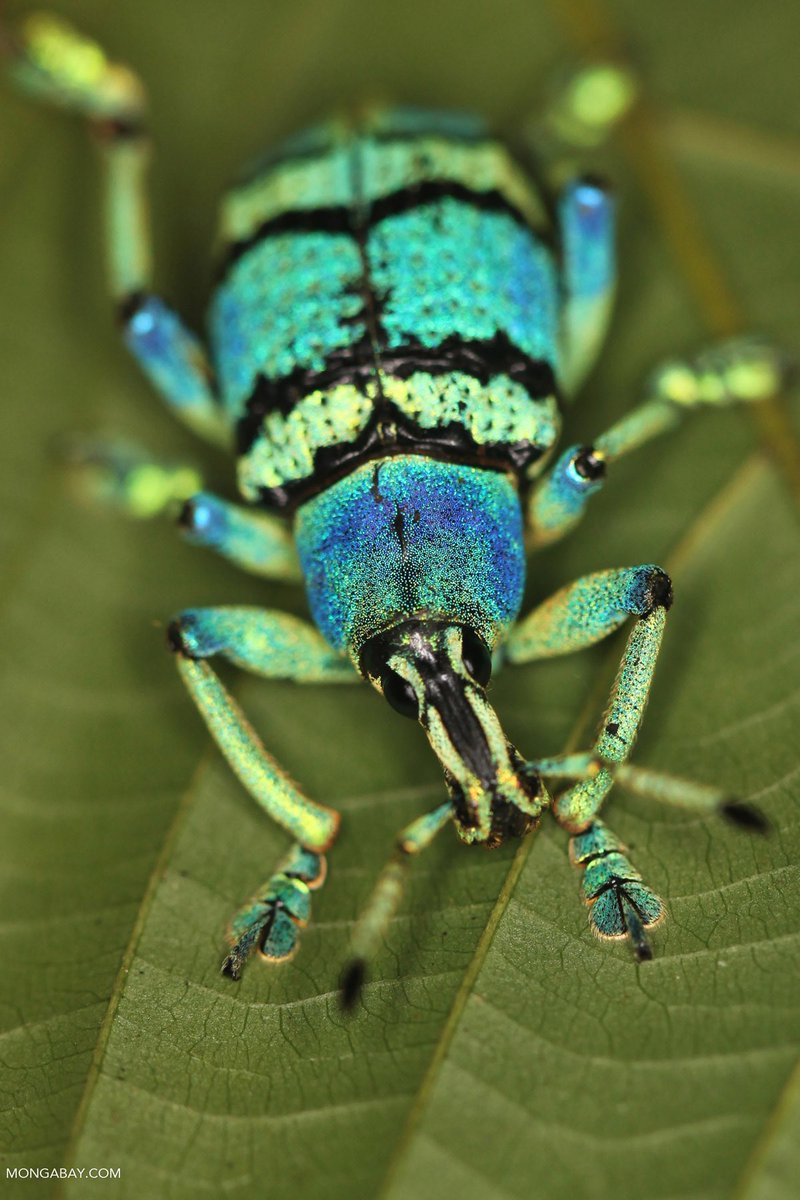
The Golden Tortoise Beetle (Charidotella Sexpunctata) is truly a stunning specimen. It is part of the leaf beetle family. Characterized by its round and rather flat body, it has a fitting name - "tortoise" (MDC). Adults are quite small, ranging from 5-7 mm, including the elytra, which extends past the body and is almost transparent with a slight golden tint (inaturalist). The protonum shield completely covers the head (MDC). The color of the body itself varies from reddish-brown to orange to a metallic gold. Being one of the only bugs with a body fully colored in gold earned it the nickname "goldbug" (inaturalist). Each color can sport black spots on its back. Sources say that spots are products of being disturbed with its function most likely being to ward off predators. Its colors change during its development but the mechanisms behind the alterations are still unclear. Theories include hydration levels (inaturalist) and threat frequency (MDC).

Its life cycle starts with the eggs being laid in clusters on the stems and undersides of leaves of its host plant. Eggs hatch after 5-10 days into spiny larvae. The larvae's colors are yellowish or reddish-brown (inaturalist). The larvae will collect the shed skin and frass into a structure called an anal fork. Frass is a term for the beetle's excrements. It uses the anal fork as a shield on its back to hide from predators (inaturalist). After 2-3 weeks, it enters the pupa stage. Like the larvae, the pupa is spiny, brown, and covered in frass. The pupa stage lasts around 1-2 weeks. Adults and larvae feed on the foliage of the convolvulaceae family (inaturalist). This family includes sweet potatoes, which gives the nickname of Sweet Potato Leaf Beetle to the golden tortoise beetle (MDC). Its lifespan is less than a month (A-Z animals).
The Golden Tortoise Beetle resides in gardens, forests, and bushes all over the Americas. Mostly in Mexico, USA, and Canada (A-Z animals). However, some have been found in Argentina (inaturalist). They are nocturnal and solitary. This tendency of being on its own makes infestations quite rare even in farms of its preferred host plants (A-Z animals). Unfortunately, it has a wide range of predators: spiders, lizards, ants, hemipterans, and rodents (A-Z animals). Hemipterans are a classification of insects that are true bugs (inaturalist).
The Golden Tortoise Beetle continues to dazzle both researchers and others with its traits. The adults look like living pieces of jewelry, yet they still have some mystery to them. As of this writing, scientists are still learning more and more about this beetle and the insect kingdom.
Sources


Comments