Tracking the Traits of the Giant Dung Digger
- HYUN SIM
- Jan 4, 2025
- 3 min read


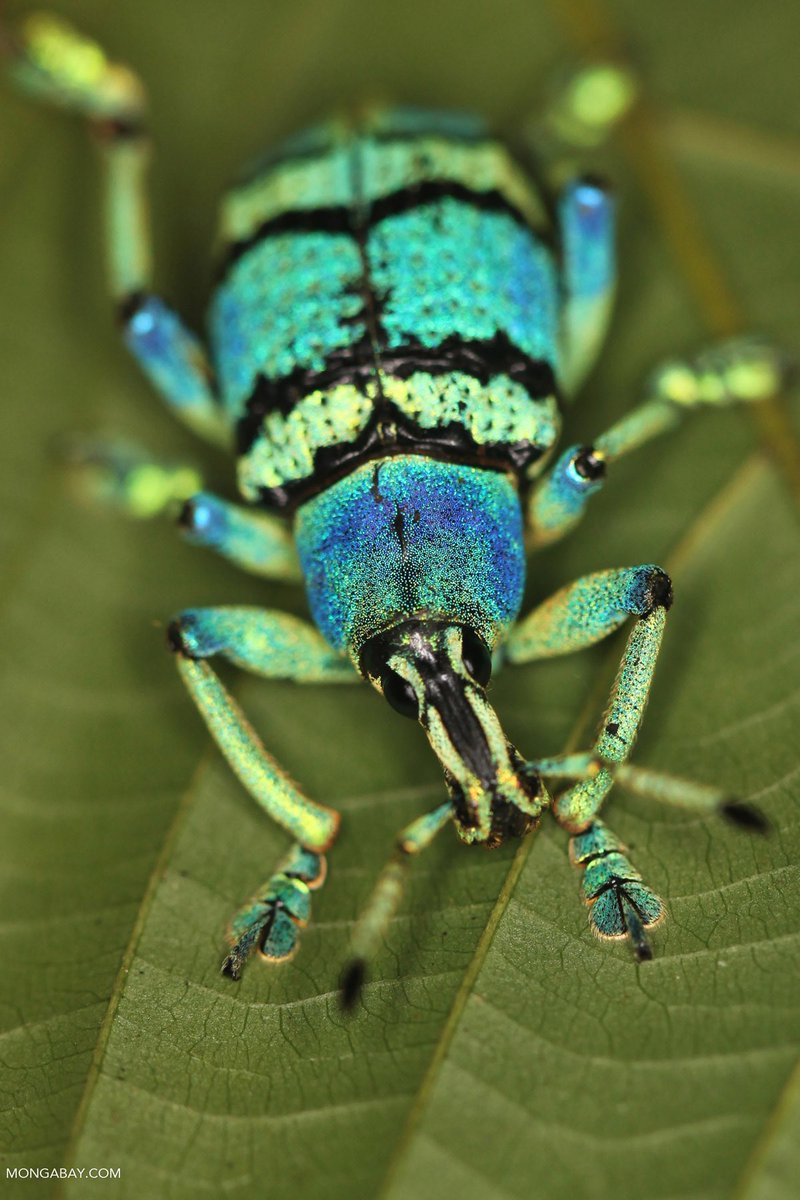
This beetle with a stunning shell of a metallic, royal blue hue is the Giant Dung Digger. The scientific name for this beetle is Coprophanaeus Lancifer. Being one of the largest dung beetles, the adult's size can vary from 28mm to over 50mm. The typical weight is around 10g (inaturalist). This critter sports a large horn on its head that is typically longer than half its body. This horn is less significant in females, but this is not the case when it comes to larger and smaller specimens of the same gender (inaturalist).
This beetle continues to prove more interesting with its colors. It can change its color tone based on the time of day. The horn stays black, but the most brightly colored area is the pronotum (inaturalist). The pronotum is the shell segment between the head and the segment covering the back legs. For those who know some insect anatomy, just think of the pronotum as the shell covering the thorax. The horn and pronotum are most visible to other beetles during dusk (inaturalist). The beetles use the color contrast between the two parts to identify each other. This correlates with their most active hours. During other hours, the contrast between the pronotum and horn's colors is not as pronounced (inaturalist). This means that the shell gets darker, becoming closer in hue to the black color of the horn.
Despite being part of the scarabaeinae subfamily, this species feeds more like a necrophage (inaturalist). The Giant Dung Digger primarily feeds on vertebrae carcasses, but as their name suggests, they also feed on feces. Occasionally they find nourishment from ripe fallen fruits. These beetles will move around extensively to find and bury food. They can fly up to 5km per day to accomplish this (inaturalist). You may wonder "Bury? Why do that instead of just eating it?" The answer is underground.
The Giant Dun Digger is paracoprid, meaning that the adults will dig tunnels to form a nest chamber. The beetles will bring parts of the carcass back down into the chamber. This is done by flipping the carcass onto its back once it is bloated and as decomposition occurs, the beetle can steal chunks (inaturalist). The beetles can move the parts as far as 30 cm from the origin. This method causes deep lesions in the carcass that can lead to incorrect diagnoses of the cause of death. This does bring them into discussion under the topic of Forensic Entomology (inaturalist). This is the use of insects found near the body to provide clues such as potential cause of death or time of death.
These beetles are found throughout terra firma forests in Venezuela, French Guinea, Guyana, Suriname, Brazil, Bolivia, and Peru (inaturalist). They live on the ground despite having flight abilities. Being on the ground makes them vulnerable to flooding, thus they are uncommon in floodplain forests. These beetles travel a lot and often bring feces with them just like other beetles referred by the title "dung," this makes them natural diffusers of seeds to wherever they travel.
These beetles are under threat due to human activities that lead to habitat fragmentation (inaturalist). Human agricultural expansion and urbanization are affecting the species most prominently in the Atlantic Forest region. Is there anything we can do to help save this shining species? By reading this blog entry, you have helped by spreading awareness!
Sources

Comments